Supreme Court Affirms Hindu Marriage Requires Ritualistic Ceremonies, Not Mere Registration
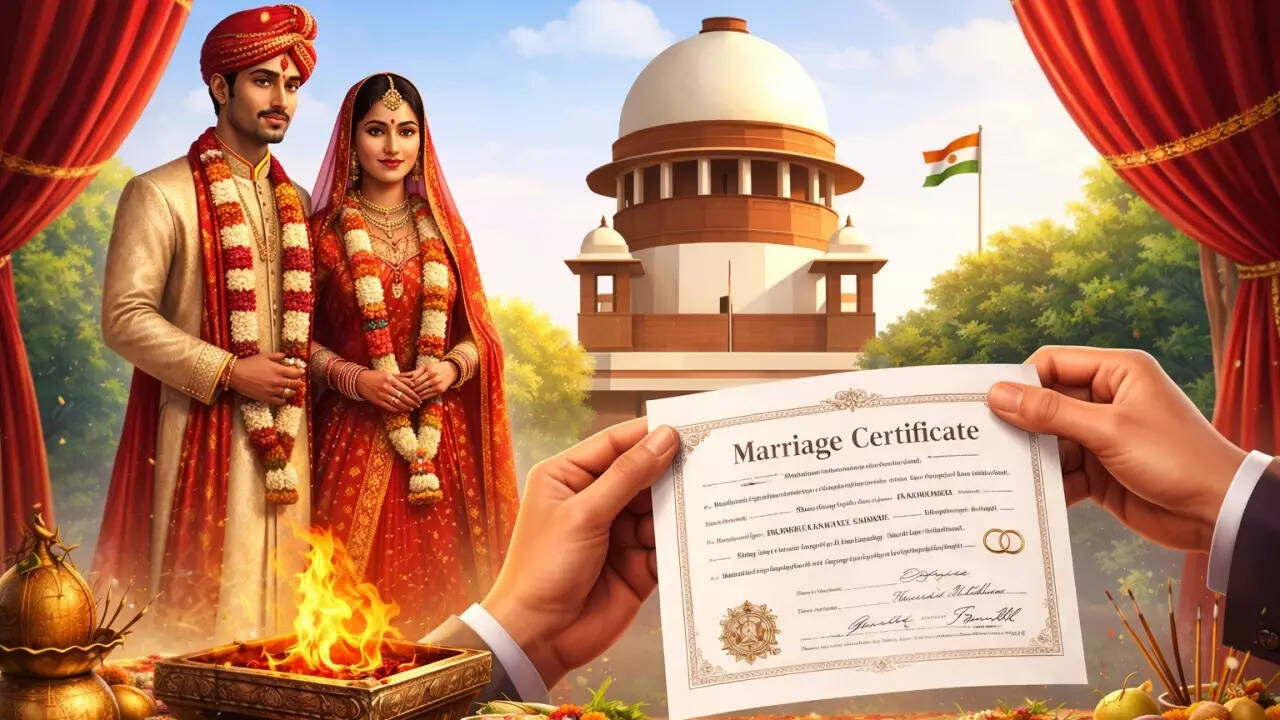
In a landmark ruling clarifying the essential requirements for Hindu matrimony, the Supreme Court of India has definitively stated that a marriage certificate cannot substitute for the performance of prescribed religious ceremonies. The case involved two trained commercial pilots who, following their engagement in March 2021, opted to obtain a marriage certificate from a private organization, Vadik Jankalyan Samiti, in July 2021, rather than conducting traditional Hindu rites. Subsequently, they secured a formal registration of marriage in Uttar Pradesh based on this certificate. The Court's analysis underscores that under the Hindu Marriage Act, 1955, the solemnization of a marriage through specific sacramental rites—such as saptapadi (the seven steps around the sacred fire)—is a fundamental legal prerequisite. The judgment reinforces that registration serves merely as evidence of a marriage already validly solemnized, not as a constitutive act creating the marital bond itself. This authoritative interpretation safeguards the ritualistic and sacramental character of Hindu marriage, preventing its reduction to a purely bureaucratic transaction. The ruling has significant implications for marital validity, inheritance rights, and social recognition, reaffirming the intersection of personal law with established religious tradition in India's legal framework.